Economics of agentic coding

Token Economics

Know what AI tokens buy you.

Definition

Token economics is the market and operating system around AI tokens: how compute is priced into tokens, how organizations allocate them, how agents consume them, and how that spend is measured against outcomes.

This page
Coding-agent operations
Quesma's focus
Spend mapped to engineering work
The visibility problem

Your bill shows the total. Not where the cost lives.

Vendor billing is designed around usage totals. It does not explain what came from context, cache traffic, retries, tool output, subagents, or model choice. Much of the bill can come from scaffolding around the model, not the model's reasoning. Even cutting tokens can raise cost when it breaks the cached prefix. Teams know what they owe, but not what they bought.

Quesma's role

Quesma turns coding-agent sessions into the itemized record: what consumed tokens, what the work accomplished, and which costs teams can change. It surfaces specific optimization opportunities and shows whether each change reduced cost without reducing useful work.

Same tree, fixed

The Efficient Token Tree

Every failure mode maps to one specific practice. Switch the whole system, not isolated leaves.

Current viewWasteful tree
RootYour token bill

Select a branch to inspect its paired failures and practices.

Maintained in the open

The field guide keeps growing.

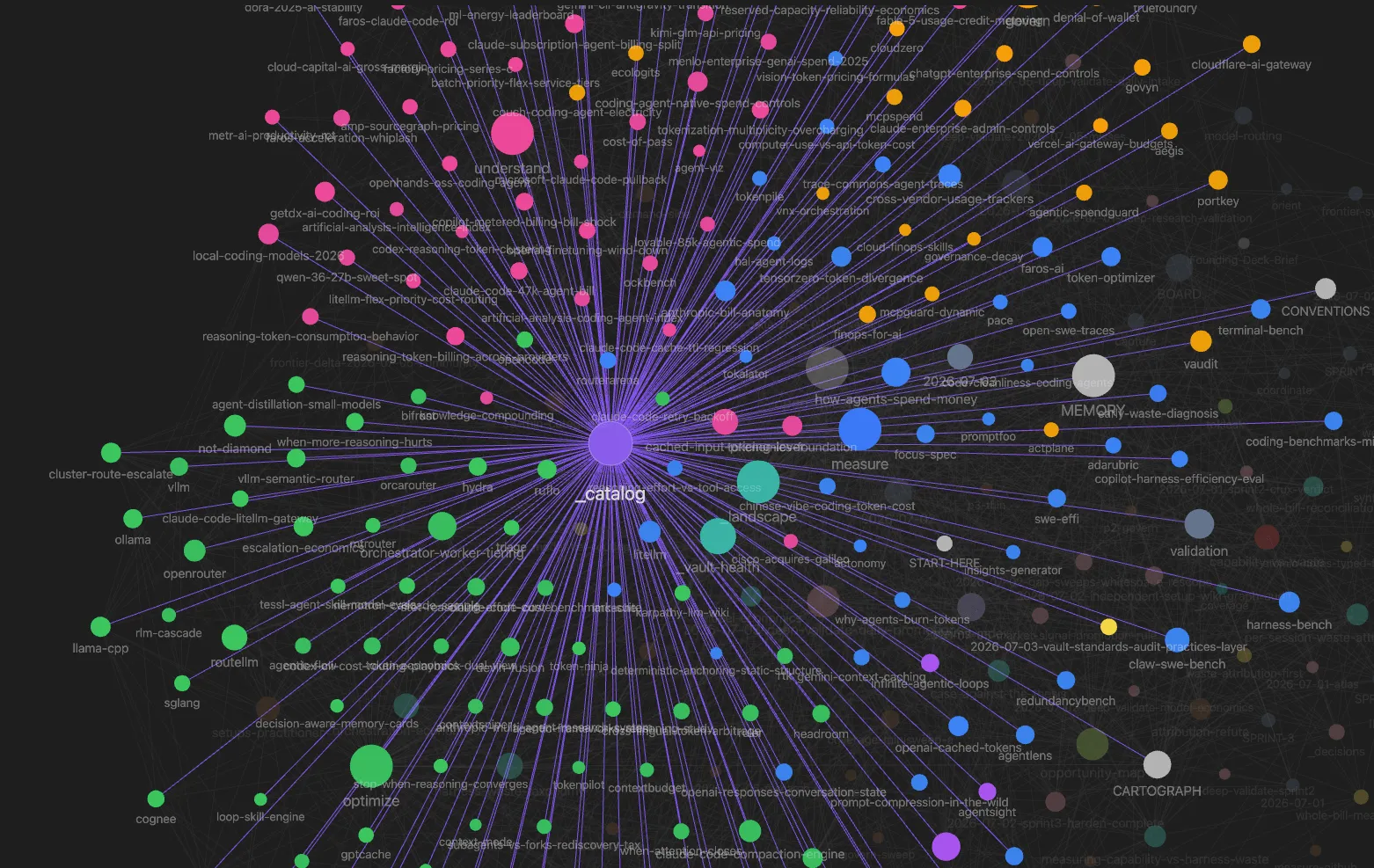
The efficient tree is a curated, evidence-graded practice set, maintained in the open.

>200entries
  • Tools
  • Research
  • Practices
  • Concepts
  • Copy-paste setups